
Jacob’s Rare Violin Rebuild in the Workshop
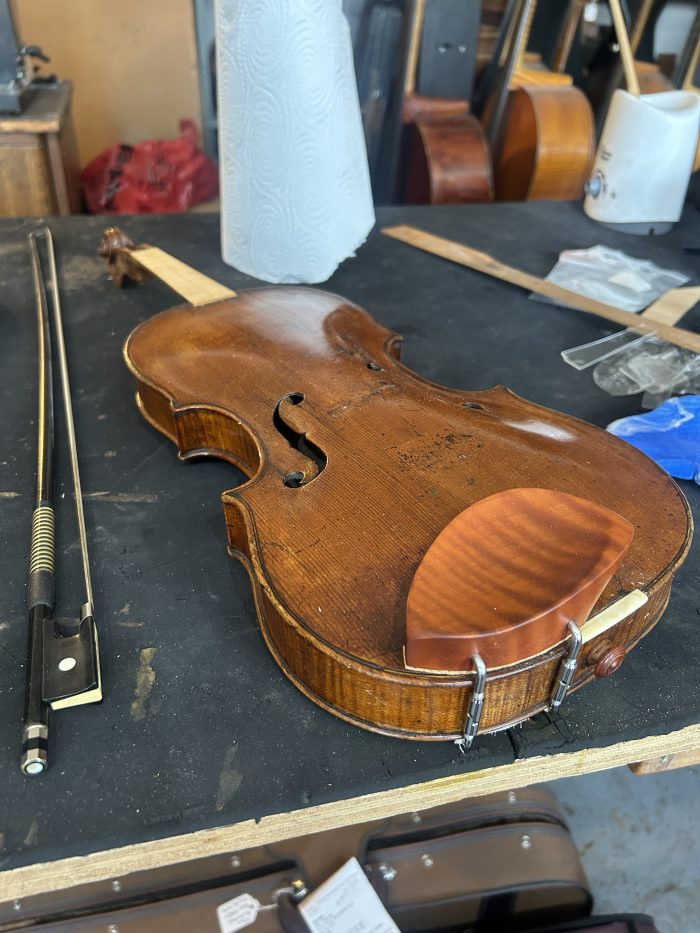
Every so often, an instrument arrives that asks for more than routine care. It needs something slower, deeper, and quietly transformative. This month, that instrument has been a violin on Jacob’s bench. As the days pass, it has become the centre of the workshop. It’s moving through a rare and intricate rebuild.
Understanding the Problem
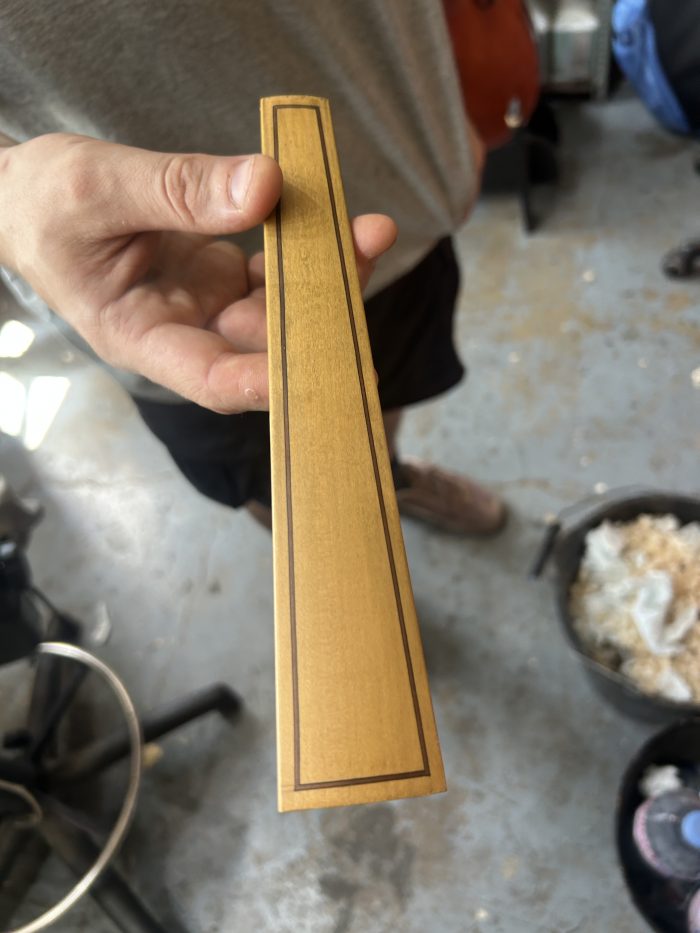
The violin came to us with a structural weakness in one of its upper bouts. Over time, years of playing had thinned and distorted the wood. Eventually, the damage reached a point where simple reinforcement could no longer protect the instrument’s future. Because of this, Jacob chose to replace the compromised section entirely. It’s a demanding process, yet one that gives the violin a stronger foundation for the years ahead.
If you’d like to learn more about Jacob and the rest of our team, you can meet them here https://bridgewoodandneitzert.london/blog/meet-the-team-welcoming-jacob-stirrat/
Removivng and Rebuilding
Jacob began by removing the damaged wood with care. He preserved as much of the original material as possible. Every millimetre matters in violin restoration, and the surrounding structure must stay stable throughout the work. This stage moves slowly and deliberately.
Once the area was ready, he selected a piece of tonewood that matched the violin’s age, grain, and density. Choosing the right wood is its own craft. It shapes how the instrument will vibrate, respond, and eventually sing again.
With the new piece chosen, the absorbing work began. Jacob carved the replacement section entirely by hand. He shaped it to mirror the original arching and flow. Meanwhile, the workshop shifted into a quieter rhythm. People paused as they passed his bench, drawn in by the focus of the process.
Precision Inside and Out
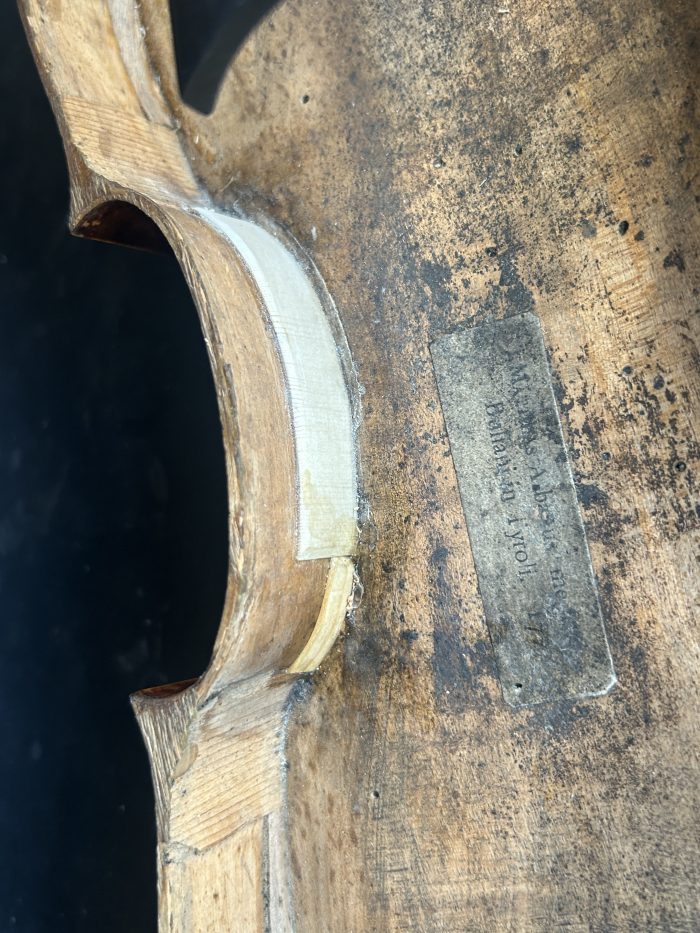
After fitting the new section, Jacob refined the interior surfaces to ensure the instrument’s strength remained consistent throughout. Then he blended the exterior into the surrounding varnish. Colour‑matching, layering, and softening the edges allow the repair to settle into the violin’s story rather than stand apart from it.
In the end, this stage is where restoration becomes something closer to art. The aim isn’t to erase the instrument’s history, but to help it continue.
Why This Work Matters
Repairs of this scale are rare in the workshop. Even so, when they arrive, they remind us of the deep relationship between player, maker, and instrument. A rebuild like this doesn’t just stabilise the violin. Instead, it supports its future voice, giving musicians a chance to keep shaping its sound for years to come.
Watching this violin return to itself has been a quiet pleasure. In time, we’ll share more photos and details. For now, it remains on Jacob’s bench, slowly finding its way back to life.
An update from the end of August:
As the summer months have given way to the autumn season, Jacob’s rare violin restoration has reached an exciting new milestone. The meticulous hand-shaping and structural rebuilding mentioned earlier in have now transitioned into final detailing and varnish touch-ups, bringing this historic instrument closer to reclaiming its true voice. Watching such a rare piece come back to life on the bench is a testament to the patience, skill, and deep respect for tradition that defines our workshop.
For those who enjoy following these quiet transformations, we post small glimpses of the workshop on Instagram: https://www.instagram.com/bridgewood_and_neitzert/?hl=en and facebook : https://www.facebook.com/bridgewoodandneitzert/

Comments are closed here.