
Meet the team: Welcoming Jacob Stirrat
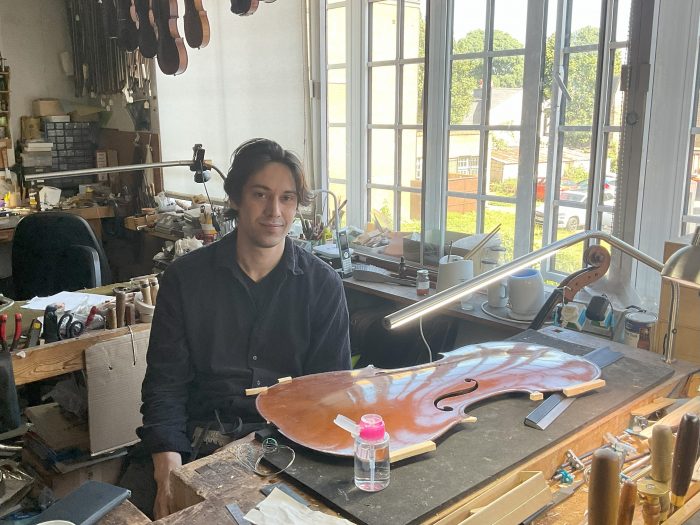
For this month’s blog I got to meet another of our new luthiers, Jacob, in his workshop on the second floor of Bridgewood and Neitzert. Jacob has been with us for five months sharing the workshop with Keisuke and Tung. Jacob played violin from an early age and was aware that there were people who fixed instruments as a career. Like many of the luthiers here, he was drawn to lutherie through a combined love of music and woodwork.
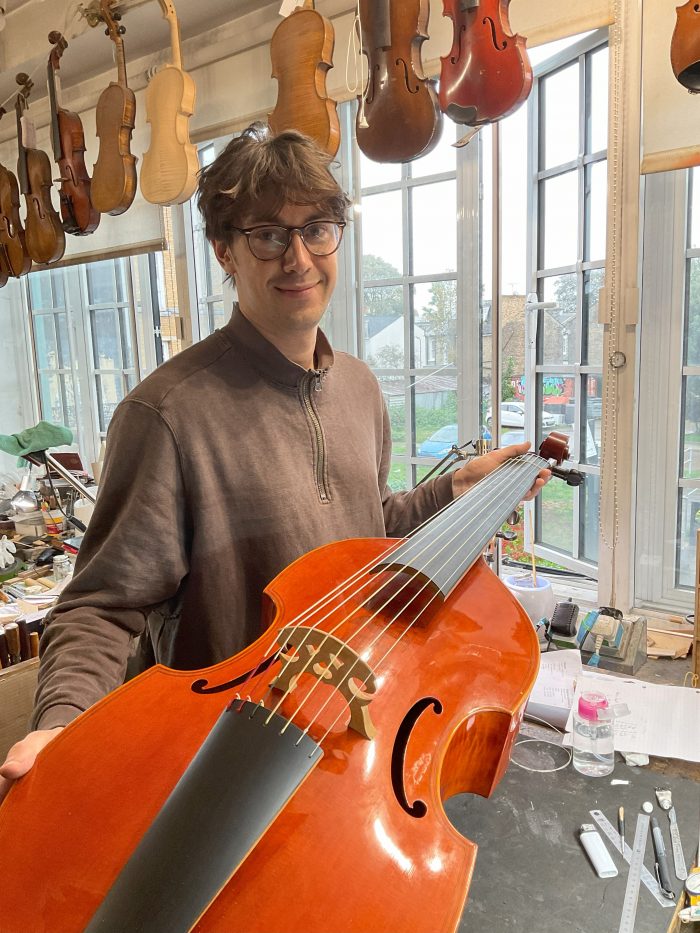
In his 20’s Jacob decided that he wanted to make a violin. He had been reading a lot about the process, and in his research had come across a violin making course at Merton – unfortunately it was full, so he enrolled on the guitar making course. During his brief time on the course, he began to learn how to use precision hand tools and work wood in fine detail. Unfortunately, he was only there for 3 months before Covid hit and his life as a luthier temporarily stalled.
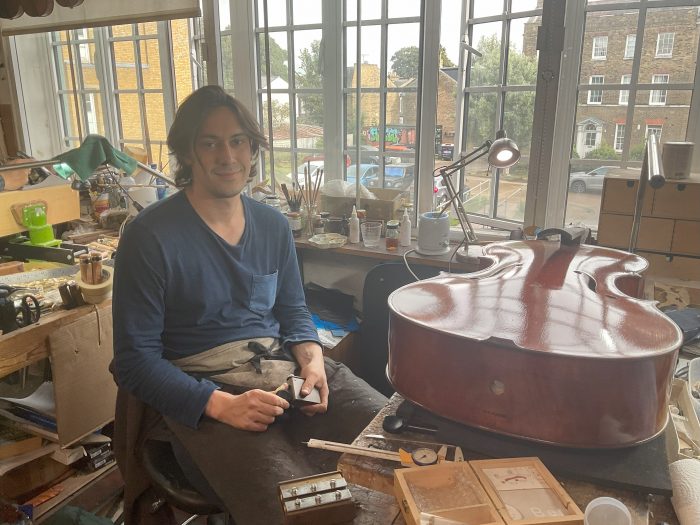
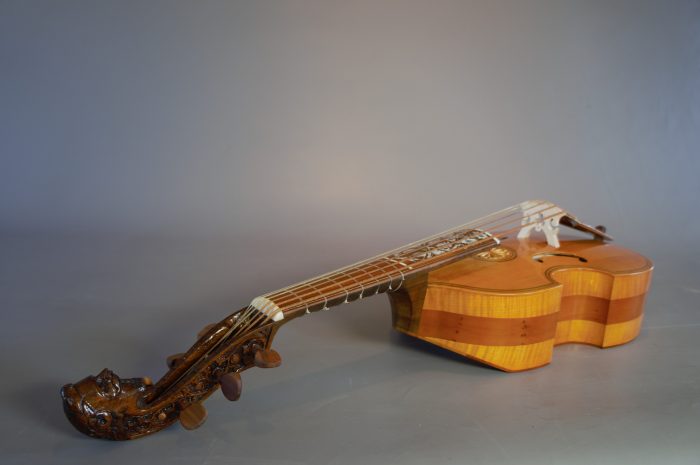
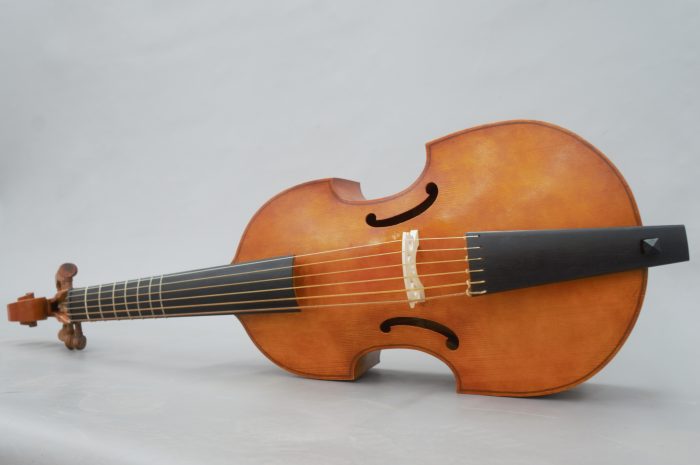
Fortunately, one of the teachers at Merton picked up on Jacob’s growing interest in early instruments and suggested that he took a look at West Dean. As soon as the lockdowns lifted, Jacob picked up his tools and headed down to West Sussex to do the Historical Craft Practices course at West Dean. Under the careful guidance of Shem Mackey, the Musician Instruments Master Craftsman, Jacob learned to make Viol da Gambas using traditional methods dating back to 1600’s. Jacob reflects on this unique craft: ‘we were taught a very free and creative way of making instruments, using methods that did not involve a mould’.
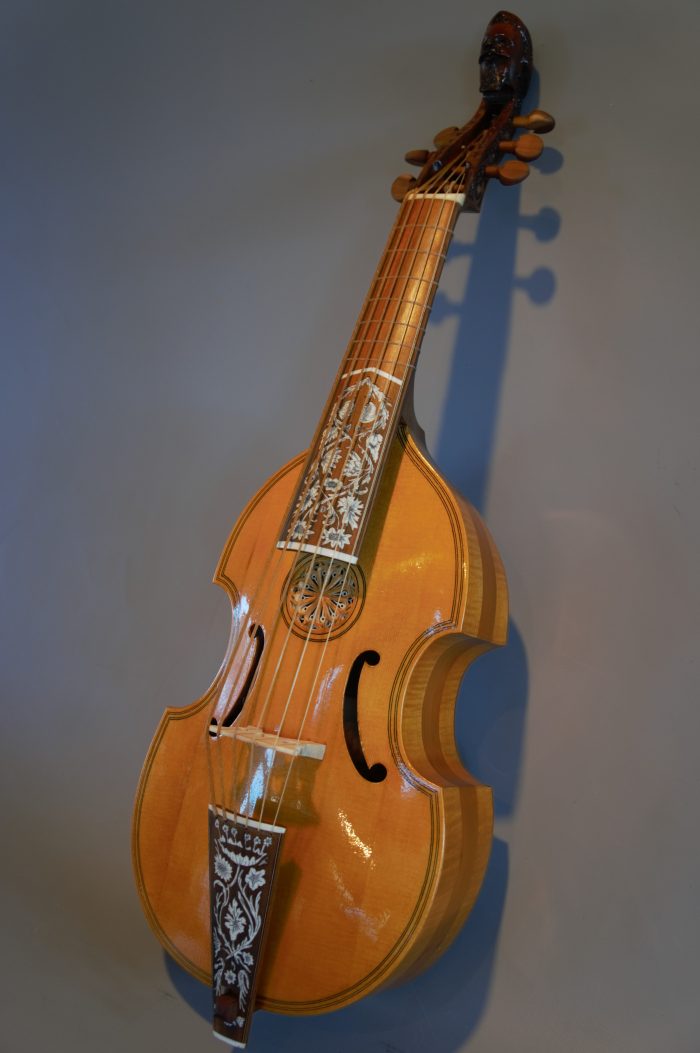
At first the students were taught how to carve scrolls and the front of the instrument building up their skills by meaning to make a range of instruments. Over his time at West Dean, Jacob made a baroque violin and two Viola da Gambas, before graduating in 2002.
After graduating Jacob started work at a leading violin shop where he began to develop his eye for lutherie. With an enormous rental fleet of instruments, he learnt to work at speed and with efficiency, cutting many bridges and doing set ups. He soon became able to look at an instrument and assess what needed doing to it and where it came from, in his words ‘I got my eye in’. He also became familiar with working with customers on their instruments finding the problems and fixing them quickly. It was a perfect foundation for his current role.
He found out about the position with Bridgewood and Neitzert through Keisuke, who we met in our last blog and knew Jacob from West Dean. Jacob modestly comments ‘I didn’t think I’d be god enough’ as he remembers embarking on his 2 day trial, but he passed and the joined the team five months ago. When I ask him what he enjoys about his role, he describes the wide range of instruments that he gets to work on and the corresponding individual approach to each repair, restoration or set up. In particular, he is pleased to be working on a range of early and historical instruments, citing some restoration work on a Henry Jay viola as a recent highlight. He is also enjoying developing his knowledge of sound adjustments, learning from Gary and Tom how to make the instruments sound the best they can. In the future, Jacob is looking forward to his chance to take forward a complete restoration on a historical instrument.


Comments are closed here.